Magic
Magic is the animating principle of The Secret Garden, the name Colin Craven gives to the mysterious, life-giving force that transforms the dead garden into a living paradise and restores his own health and spirit. It is not a supernatural power in the traditional sense but a blend of natural vitality, the regenerative energy of spring, and the power of positive thought. Colin, Mary Lennox, and Dickon Sowerby come to believe in Magic as a tangible, almost scientific force that can be harnessed through belief, repetition, and joyful action, making it the philosophical and emotional core of the novel's resolution.
Definition and Nature
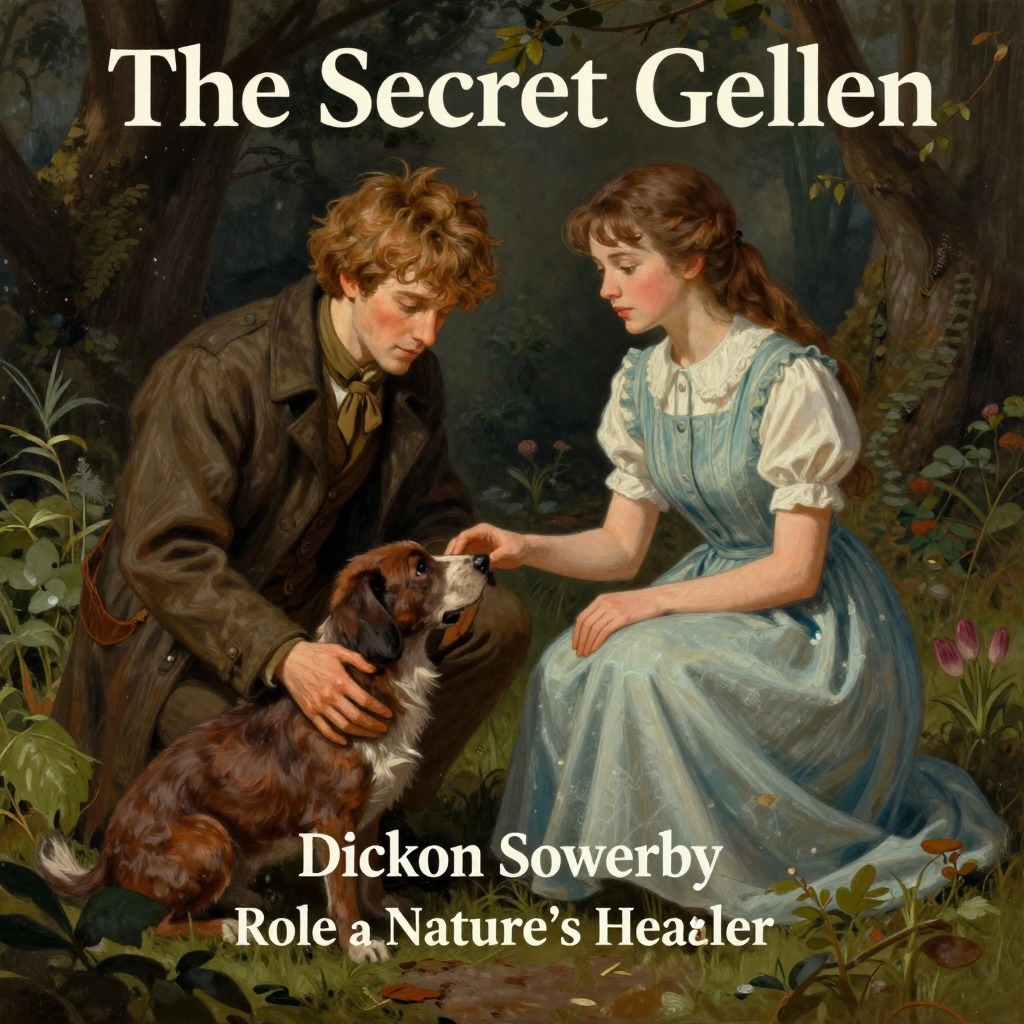
Colin defines Magic as the force that "is always pushing and drawing and making things out of nothing," the power behind the sun's rising, the growth of leaves and flowers, and the very fact of being alive. He declares that "everything is made out of Magic," from badgers and squirrels to people themselves. Mary Lennox, who had heard tales of Indian fakirs, distinguishes it as "not black" but "as white as snow," a good and benevolent power. The children's belief is so strong that they treat Magic as a practical, almost scientific phenomenon, with Colin planning to make "great scientific discoveries" about it. Susan Sowerby, the wise mother figure, affirms this view, telling Colin that the same force that makes seeds swell and the sun shine is the "Big Good Thing," and that its name matters little—whether called Magic in England or something else in France or Germany, it is the same creative, sustaining power.
The Magic Experiment
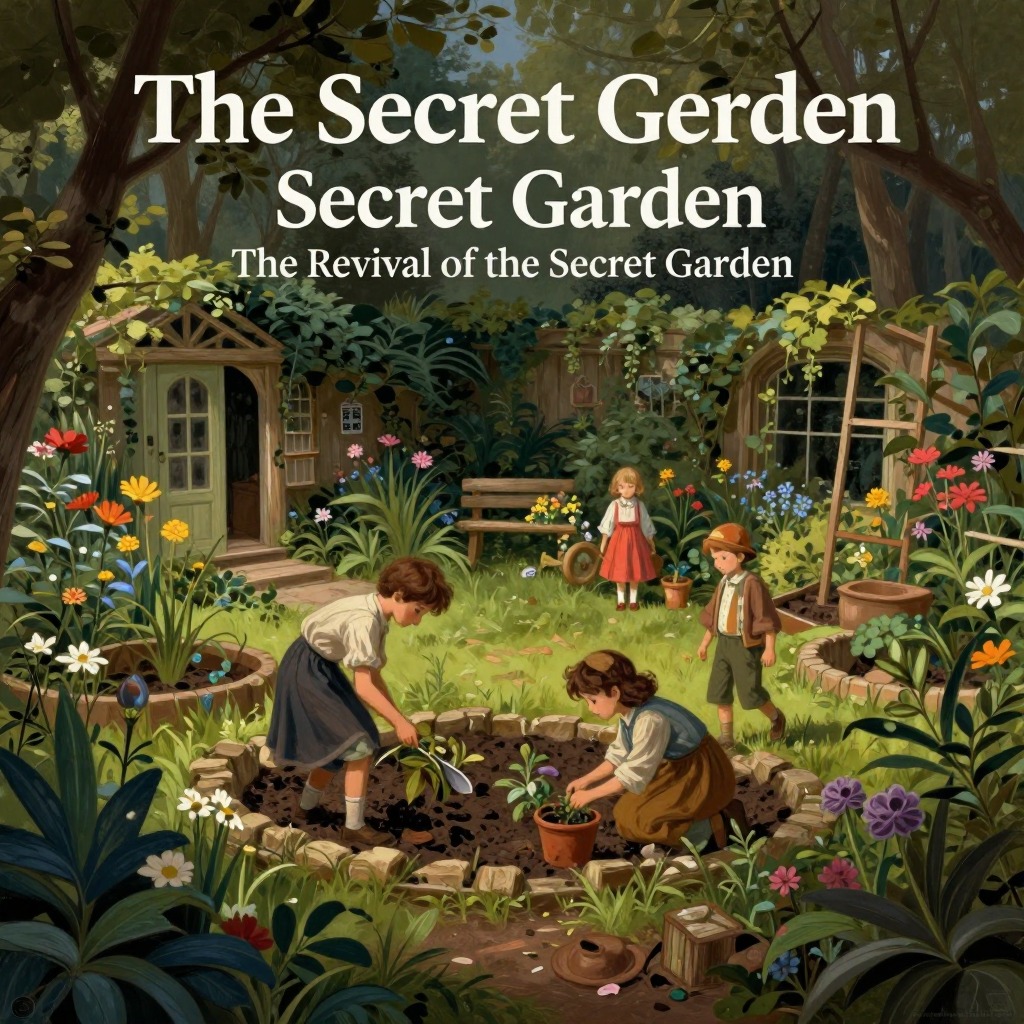
Colin formalizes his belief into a deliberate "scientific experiment" designed to harness Magic for his own recovery. He instructs Mary, Dickon, and Ben Weatherstaff to join him in a daily ritual: sitting in a circle under the plum tree in the secret garden, they chant affirmations such as "The sun is shining—that is the Magic. The flowers are growing—that is the Magic. Being alive is the Magic—being strong is the Magic. The Magic is in me—the Magic is in me." Colin believes that by "saying nice things are going to happen until you make them happen," he can draw Magic into himself. He credits the success of this experiment for his newfound ability to stand, walk, and ultimately run, declaring after his first full circuit of the garden, "I did it! The Magic worked! That is my first scientific discovery." The experiment is reinforced by daily muscle exercises taught by Dickon, which Colin integrates into his routine as part of the Magic's practical application.
Magic and Transformation
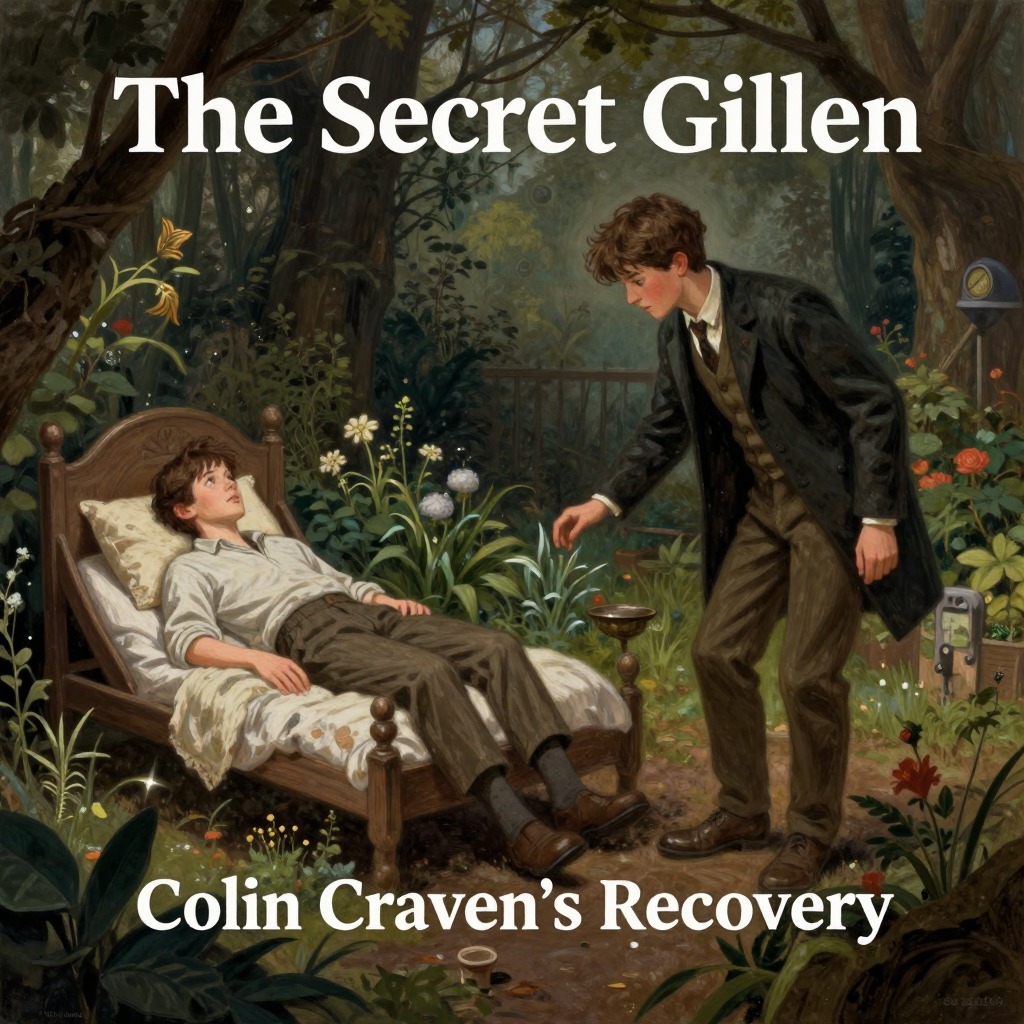
The concept of Magic is inseparable from the physical and emotional transformations of the characters. Colin directly attributes his recovery to it, crying out, "The Magic in this garden has made me stand up and know I am going to live to be a man." Mary, too, is changed; as her mind fills with thoughts of the robin, Dickon, and the garden, there is "no room left for the disagreeable thoughts" that had made her sickly and sour. The garden itself is the primary evidence of Magic at work, as it transforms from a gray, seemingly dead tangle into a riot of green leaves, blossoms, and life. Even Ben Weatherstaff, the gruff old gardener, is drawn into the circle of belief, though he grumbles about his rheumatics. The culmination of this transformative power is Colin's spontaneous decision to stand and walk, which he describes as being driven by a sudden, overwhelming realization that "something had rushed all through him—a sort of rapturous belief and realization." This moment of pure, joyful conviction is the Magic made manifest.
Thematic Significance
Magic serves as the novel's unifying metaphor for the restorative power of nature, positive thinking, and human connection. It is the antidote to the "wrong Magic" of negative thoughts, which Colin identifies as the source of his own illness and his father's prolonged grief. Susan Sowerby articulates this most clearly when she tells Colin that the "Big Good Thing" does not care what name it is called; what matters is the joy and belief behind the invocation. The children's singing of the Doxology—"Praise God from whom all blessings flow"—is presented as a natural expression of the same impulse that leads Colin to shout about Magic. The novel ultimately suggests that Magic is not a supernatural intervention but a way of understanding and participating in the natural, life-affirming processes of the world. As Colin declares, "Of course there must be lots of Magic in the world, but people don't know what it is like or how to make it. Perhaps the beginning is just to say nice things are going to happen until you make them happen." This practical, almost psychological interpretation of Magic makes it a powerful tool for self-transformation and a central pillar of the book's hopeful message.